Key takeaways
- Laurel berry oil (INCI: Laurus Nobilis Fruit Oil) is a fixed oil from the fruit of Laurus nobilis. It is not bay laurel leaf essential oil.
- Traditional production boils the berries in water and skims the oil that separates. Laurel berry oil is also sold as cold-pressed oil.
- An extraction-method label alone does not establish authenticity, and a fatty acid profile alone does not verify the extraction method.
- Ask for a written process description, a batch-specific COA and a sample from the same lot, then test the oil in your own formula.
Buyers comparing laurel berry oil offers usually meet two process descriptions: traditional water extraction and cold pressing. This guide does not rank them. It sets out what each description should mean, which questions a document can answer, and what to request before you approve a supplier or a lot.
What Is Being Compared? Fruit Oil, Not Leaf Essential Oil
Both process terms refer to the same material: the fixed oil of the laurel fruit, INCI name Laurus Nobilis Fruit Oil, from the berries of Laurus nobilis. It saponifies, which is why it is used as a soap oil, best known in Aleppo soap.
Bay laurel leaf essential oil is a different product. It is distilled from the leaves, it is a volatile essential oil rather than a fixed oil, and it does not saponify. If an offer is unclear about which one it is, read our guide to bay laurel leaf essential oil first.
Before comparing process routes, check that both offers really are fruit oil. The INCI name, the plant part (fruits/berries) and the fatty acid profile on the COA should all point to laurel berries. The CAS number is not enough on its own: some public databases list 8007-48-5, the number on our laurel berry oil documents, against laurel leaf oil as well.
Traditional Water Extraction: Boiling and Skimming
Traditional production in Hatay follows the method used here for generations. Mature berries are hand-picked from November to January and boiled in water in large cauldrons. The oil separates from the seeds and pulp, rises to the surface and is skimmed by hand. It is then left to settle for weeks and filtered.
Our laurel berry oil is made this way, and our Technical Data Sheet records the method as traditional water/heat extraction, separation, decantation and filtration. It is not cold pressed.
For a traditionally extracted lot, the useful questions are practical ones. When were the berries harvested? How was the oil separated, settled and filtered? Which batch number links the pail or drum to the COA? A supplier that makes the oil should be able to answer in writing.
Cold Pressing: What the Process Description Should Specify
Laurel berry oil is also offered as cold-pressed oil. “Cold pressed” names a mechanical pressing route, but the words on a label do not tell you how a particular lot was handled. If you are evaluating a cold-pressed offer, ask the supplier to describe the process in writing, including:
- what was pressed (whole berries, pulp or kernels) and how the fruit was prepared beforehand;
- whether the supplier sets a temperature limit for the process, and how it is recorded;
- how the oil was clarified — settling, filtration or other steps;
- whether any further processing was applied after pressing;
- the batch number that links the process record to the COA.
The same request applies to any process term, including “traditional”. A term on a label is a claim; the process record for the lot is the evidence that supports it.
Comparing Specifications: What Labels and COAs Can—and Cannot—Tell You
A Certificate of Analysis (COA) reports measured values for one batch. A Technical Data Sheet (TDS) gives the ranges the supplier commits to. Neither replaces the other, and neither is a process record. The table sets out what to verify and where.
| What to verify | Document or check | What it can confirm | What it cannot confirm alone |
|---|---|---|---|
| Fruit oil, not leaf oil | INCI name, plant part, fatty acid profile | That the material is consistent with a laurel fruit oil | How it was extracted |
| Extraction method | Written process description and production records | The method stated for that lot | Anything about a different lot |
| Within specification | Batch COA read against the TDS ranges | That measured values sit inside the stated ranges | Origin or extraction method |
| Right document for the goods | Batch number on COA, label and packing list | Traceability from container to report | Performance in your formula |
| Fit for your product | Sample from the same lot, your own trial batch | Behaviour in your formula and process | Behaviour of later lots |
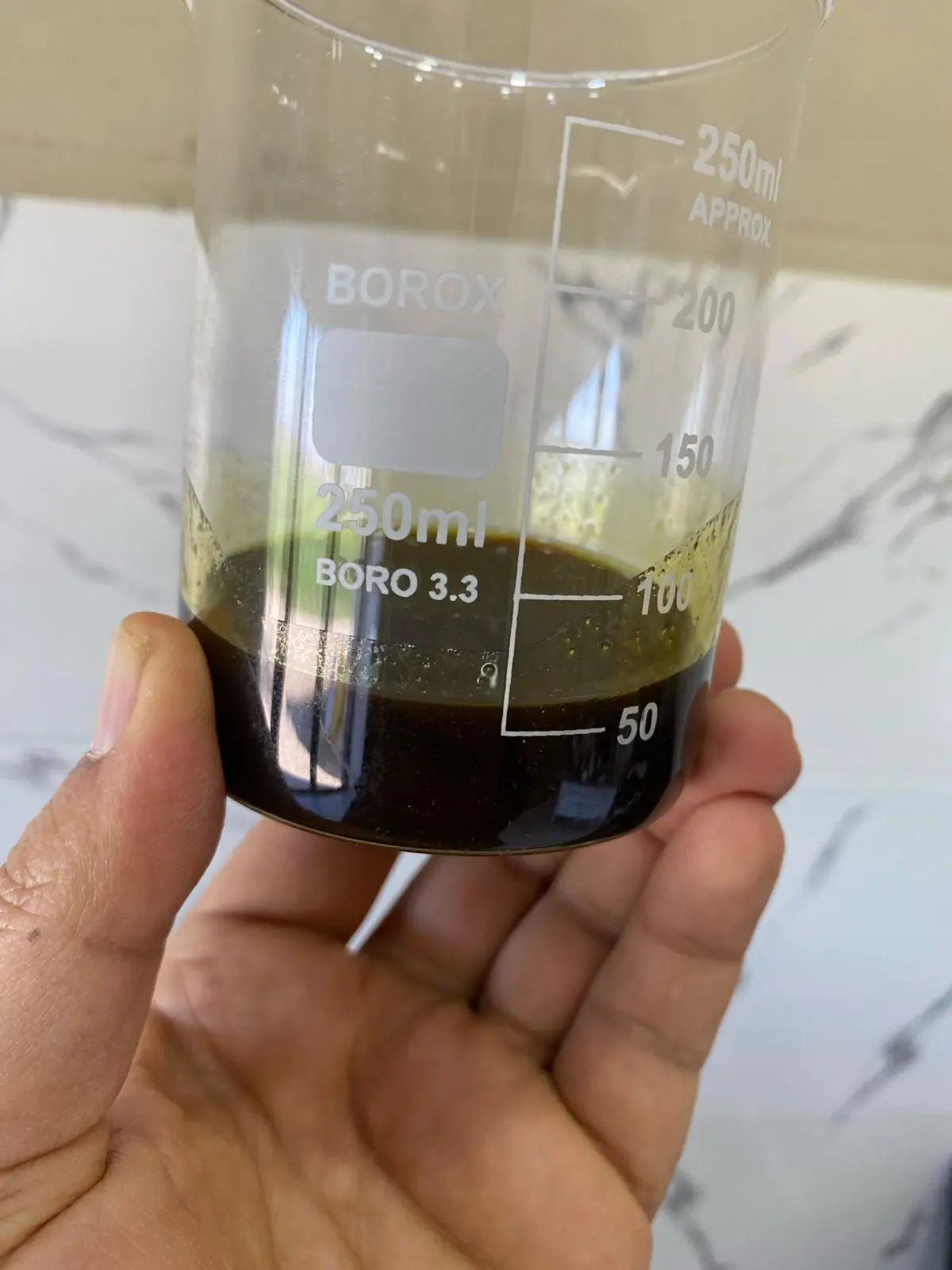
| Colour and smell | Visual and odour check of the sample | Consistency with the TDS description | Authenticity, extraction method or grade |
For reference, these are the typical ranges on our TDS for our water-extracted oil: lauric acid 10–30%, myristic <2%, palmitic 5–25%, stearic <2%, oleic 30–50%, linoleic 11–25% and linolenic <2%; saponification value 180–220 mg KOH/g; iodine value 60–120. The TDS describes the colour as green to green-brownish. A fatty acid profile shows what an oil is made of; it does not show how the oil was extracted, so read it together with the process records.
Physical state is worth knowing at goods-in. Our TDS describes the oil as liquid at ambient temperature; it may thicken or partially solidify when stored cool. Warm gently and mix to a uniform liquid before sampling or use.
Uses in Soap and Cosmetic Formulation: What Requires Testing
Laurel berry oil is used in Aleppo-style soap, in cold process and hot process soap, in shampoo bars, and in creams and balms. Whichever process route you buy, the formulation steps are the same:
- Lye calculation from the batch COA. Our documented saponification value is 180–220 mg KOH/g: about 0.180–0.220 g KOH per g of oil (typically 0.202), or 0.128–0.157 g NaOH (typically 0.144). The NaOH figure is a calculated conversion, not a separately measured value.
- Trial batch with the sample lot. Check trace, hardness and aroma in your own formula before scaling up.
- Lot records. Keep the COA of each lot with your batch records so that any change can be traced.
- Claims review. A process term on a raw material does not give a finished product any particular property. Product claims belong to your own regulatory review.
A change of supplier or process route is a formulation change. Treat it as one and retest rather than assume the oils are interchangeable. Our laurel berry oil for soap making page covers soap formulation in more detail.
Choosing a Supply: Process Records, Batch Documents and Samples
A fixed request list keeps supplier comparisons fair:
- Identity: INCI name, botanical name (Laurus nobilis L.) and plant part.
- Process: a written process description for the lot offered.
- Batch documents: a batch-specific COA with fatty acid profile, plus TDS and SDS.
- Sample: from the same lot as the documents.
- Traceability: a batch number on every container.
- Import documents: certificate of origin and any documents your market requires.
For our oil, the TDS, SDS and a reference COA (batch LBY2025) are published on the laurel berry oil specification page, and each shipment includes a lot COA, SDS and export documentation. Packaging runs from a 5 kg pail for a first order to 20 kg pails, 180 kg drums and IBC; see laurel berry oil wholesale. For background on the oil itself, read What Is Laurel Oil?
Request Process Records and a Batch COA
Gharsoap produces laurel berry oil (INCI: Laurus Nobilis Fruit Oil) in Hatay, Türkiye, by traditional water extraction. Tell us the quantity, packaging and destination, and the documents you need for supplier approval.