Key takeaways
- The laurel percentage is the share of laurel berry oil in the soap’s oil blend; the rest of the blend is olive oil.
- We manufacture four grades: 5%, 10%, 20% and 40% laurel.
- A higher percentage gives a stronger laurel aroma and a deeper green interior. It is a different specification, not a ranking.
- Colour and smell cannot confirm a stated percentage. Ask for a formulation statement, the INCI declaration and the batch documents.
The laurel percentage is the headline specification on an Aleppo soap offer and usually the first number a buyer asks about. This guide explains what the figure refers to, what changes from one grade to the next, and how to confirm the grade written on a quote.
What the Laurel Percentage Measures
Aleppo soap is made from two oils — olive oil and laurel berry oil (INCI: Laurus Nobilis Fruit Oil) — saponified with sodium hydroxide and water. The laurel percentage states how much of that oil blend is laurel berry oil. A 20% bar is made from an oil blend that is 20% laurel berry oil and 80% olive oil.
The figure is not the share of laurel oil in the weight of the finished bar. The finished soap also contains water, and the oils have reacted with the lye. On the label, the saponified oils appear under their INCI names; our declaration reads Sodium Olivate, Sodium Laurate, Aqua, Glycerin.
Because sellers do not always describe their figures the same way, ask any supplier what its percentage is calculated against. Other figures appear in market listings, and the same question applies to every one of them.
The Four Grades We Manufacture: 5%, 10%, 20% and 40%
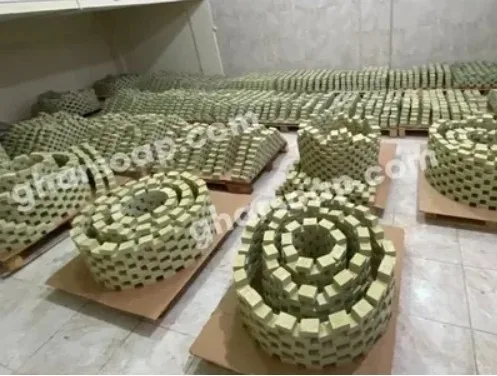
Our Aleppo soap is made in Hatay, Türkiye, by the traditional hot process and cured 10–18 months. Every grade uses the same four ingredients — olive oil, laurel berry oil, water and sodium hydroxide. Only the proportion of laurel berry oil changes.
| Grade | Laurel berry oil in the oil blend | Olive oil in the oil blend | Aroma and appearance |
|---|---|---|---|
| 5% | 5% | 95% | Lowest laurel content; lightest laurel aroma |
| 10% | 10% | 90% | Mid-range laurel content; moderate aroma |
| 20% | 20% | 80% | Higher laurel content; stronger characteristic aroma |
| 40% | 40% | 60% | Highest laurel content; most distinctive aroma and deepest green interior |
Bar sizes are 100 g, 150 g and 200 g, with custom sizes available. Wholesale orders start at one pallet (500–800 bars, depending on bar size and packaging), and mixed pallets across grades are accepted. Grade details are on our Aleppo soap grades section.
What Changes Between Grades — and What Does Not
As the laurel share rises, the laurel aroma becomes more pronounced and the interior colour deeper, because laurel berry oil itself is green to green-brownish. The bar format, the curing period, the ingredient list and the documentation stay the same across all four grades.
The percentage does not rank the grades. A 40% bar is not a superior soap to a 5% bar; it is a different specification with a stronger laurel character. Nor is the percentage a guide to skin type. We do not recommend grades by skin type and make no claims about skin conditions; any claims on your own label are the brand owner’s responsibility.
The colour and smell of a particular bar also depend on the oil lot, the curing and the age of the bar. That is why two bars of the same grade can look slightly different, and why appearance is a poor way to read a grade. Our guide to Aleppo soap curing, color and storage explains these variations.
How to Choose a Grade for Your Product Line
Grade selection is a product decision. The points below are the ones buyers raise most often:
- Aroma strength: start from how strong a laurel aroma your customers expect. The 5% and 10% grades read lighter; the 20% and 40% grades read distinctly herbal.
- Range structure: many brands carry more than one grade so that customers can choose the aroma strength. A mixed pallet lets you test this without committing to one grade.
- Label consistency: the percentage on your label must match the grade supplied in every lot.
- Side-by-side samples: compare samples of the grades you are considering before you fix the specification.
- Private label: under your own brand, the grade becomes part of your product specification. See white label and private label Aleppo soap.
How to Confirm the Stated Percentage
Neither colour nor smell can confirm a percentage. Ask instead for:
- a written formulation statement giving the laurel percentage and what it is calculated against;
- the INCI declaration for the bar;
- the batch documents for the lot supplied — our shipments include a COA, SDS, INCI declaration, allergen statement and certificate of origin;
- samples from the production lot, kept as retained samples for later comparison.
Keep these with your purchase records so that each reorder can be checked against the same specification. For a full supplier checklist, see How to Verify Aleppo Soap; for the history and ingredients of the soap, see our Aleppo soap guide.
Choose Your Laurel Grade
Gharsoap manufactures Aleppo soap in Hatay, Türkiye, in 5%, 10%, 20% and 40% laurel grades, with COA, SDS and INCI documentation. Tell us the grades, bar size, packaging and destination.